✂️ Cut buy sheet and vendor receipt creation time by 30%

Organisation
Fortune 500 Retail Company
Role
UX Designer
Duration
1 month
Tools & Technologies
Figma
Data Heavy
Reporting
Vendors
Problem
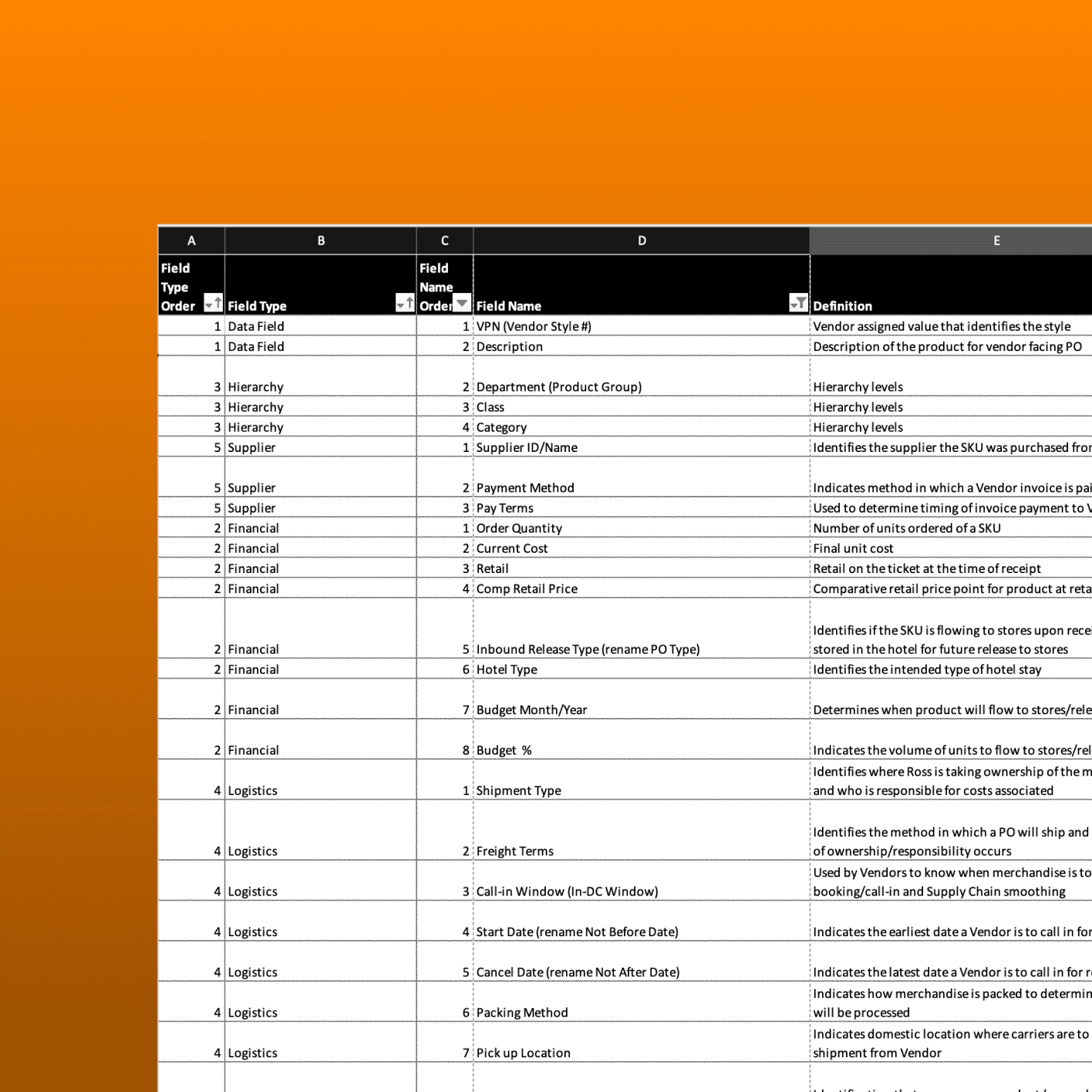
The older system relied too heavily on Excel, which just created confusion for vendor tracking, receipt organization, and note sharing. They wanted this to be shareable, versioned, and user-friendly.

My role
Created interactive mid-fidelity prototypes for a new web-based enterprise-wide solution for buyers to create, edit, store, and share important process documents such as Buy Sheets, Assortment Sheets, and Purchase Orders.
Outcome
Cut vendor receipt (Assortment - Buy - Purchase Order) creation time by 30%
How I solved it
This was one of the most challenging projects in my career.
Research
Starting out, I had to skip the initial discovery phase due to time constraints. The client was fine with the potential lack of traditionally gathered user data to get initial design idea off the ground. The client wasn't having design conversations at all, and we needed to go "blue sky" with it and start with the basics.
This is a very typical trade-off that happens in consulting because many clients are pressed for time and we need to create value for them fast. It puts us in a startup mindset.
UI Kit Created From Scratch
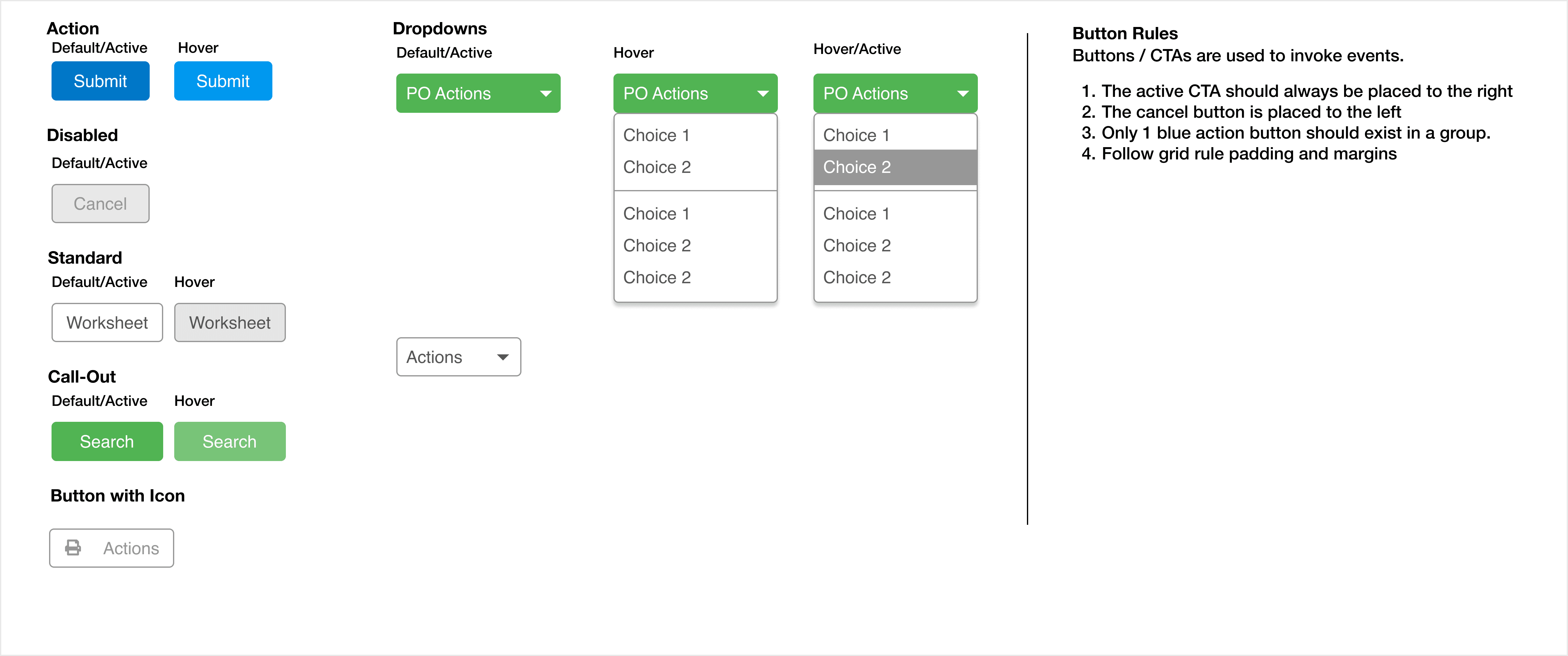
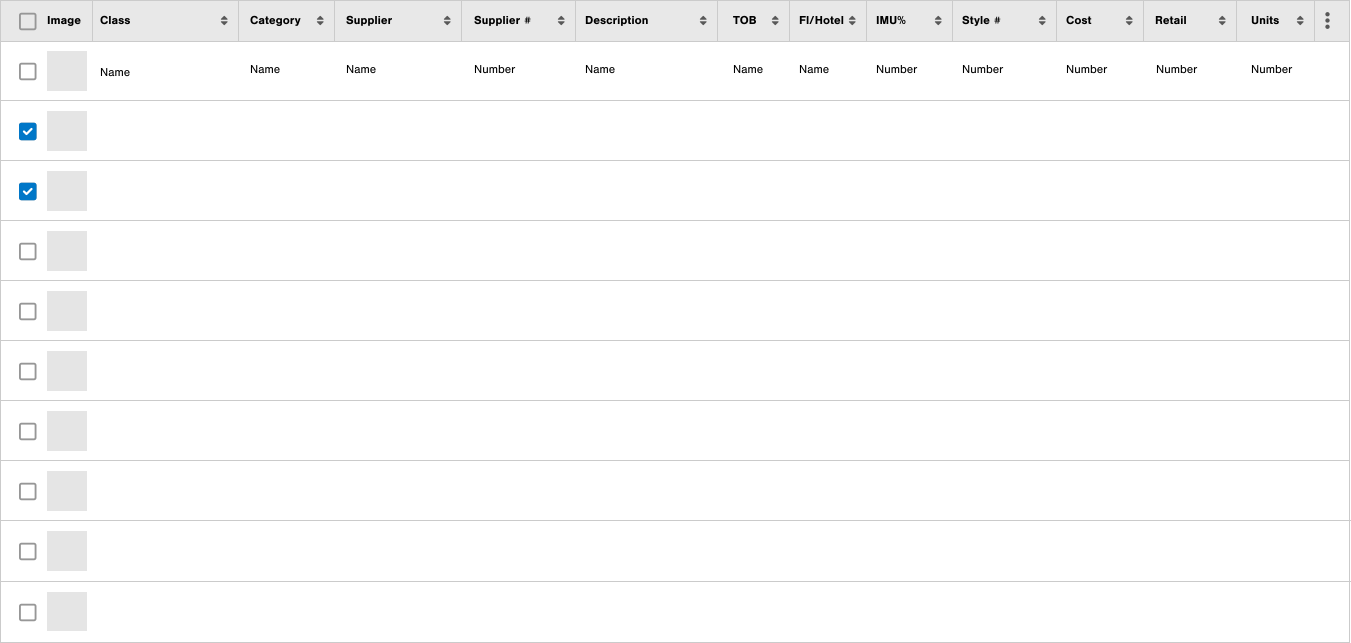
After a thorough walk-through of an existing tool that the reps use for ordering and quotes, I moved on to starting the mid-fidelity component library. These components all had to be made from scratch since the client didn't have an in-house design team or a marketing department that kept at least a style guide.
Design
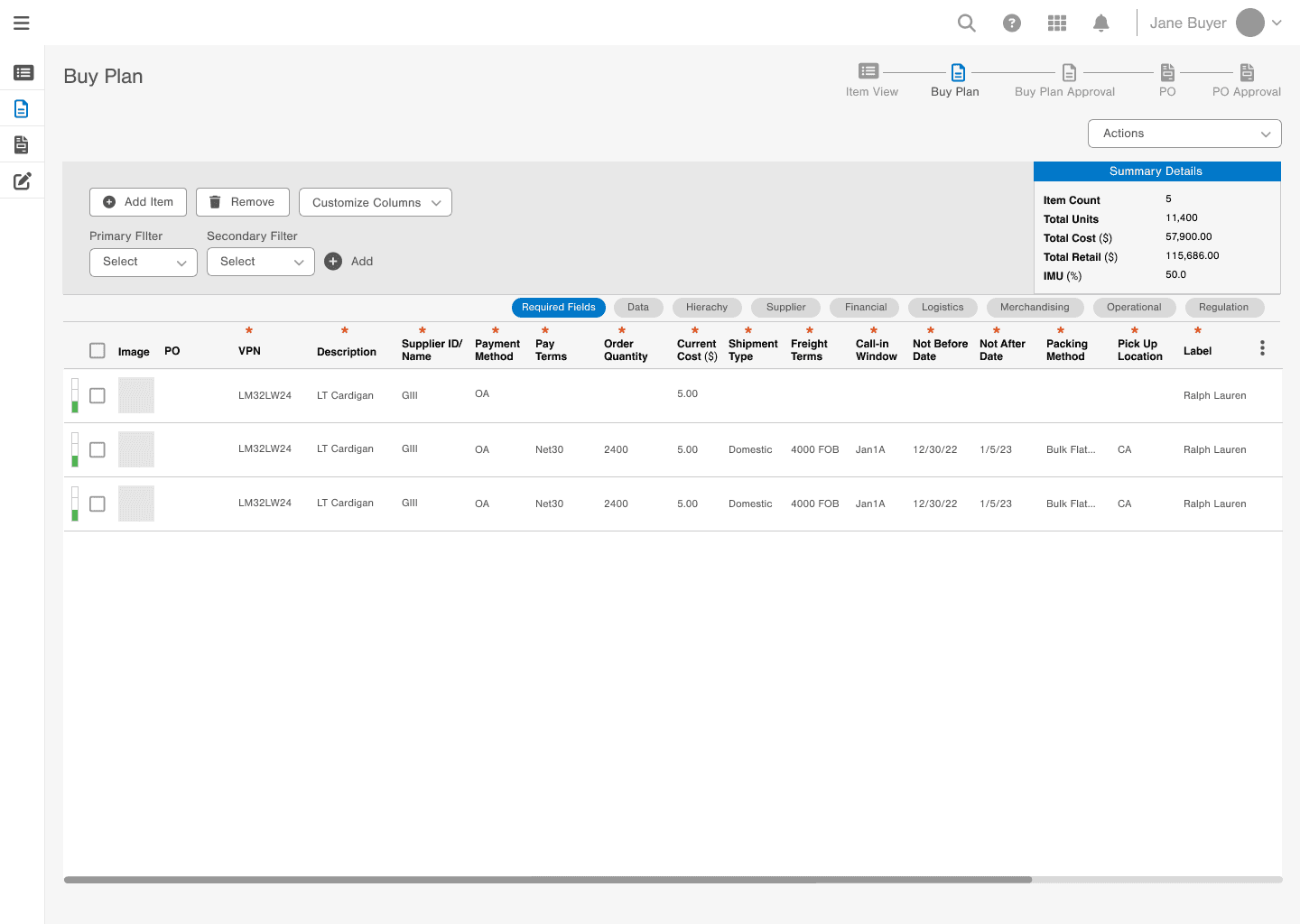
With all this and a limited amount of time, I prioritized what I was tackling first...assortment sheet creation.
At first I created a path in the top right for people to see where they were in the process but after some discussion with stakeholders the path was removed to conserve space.
V1
Final
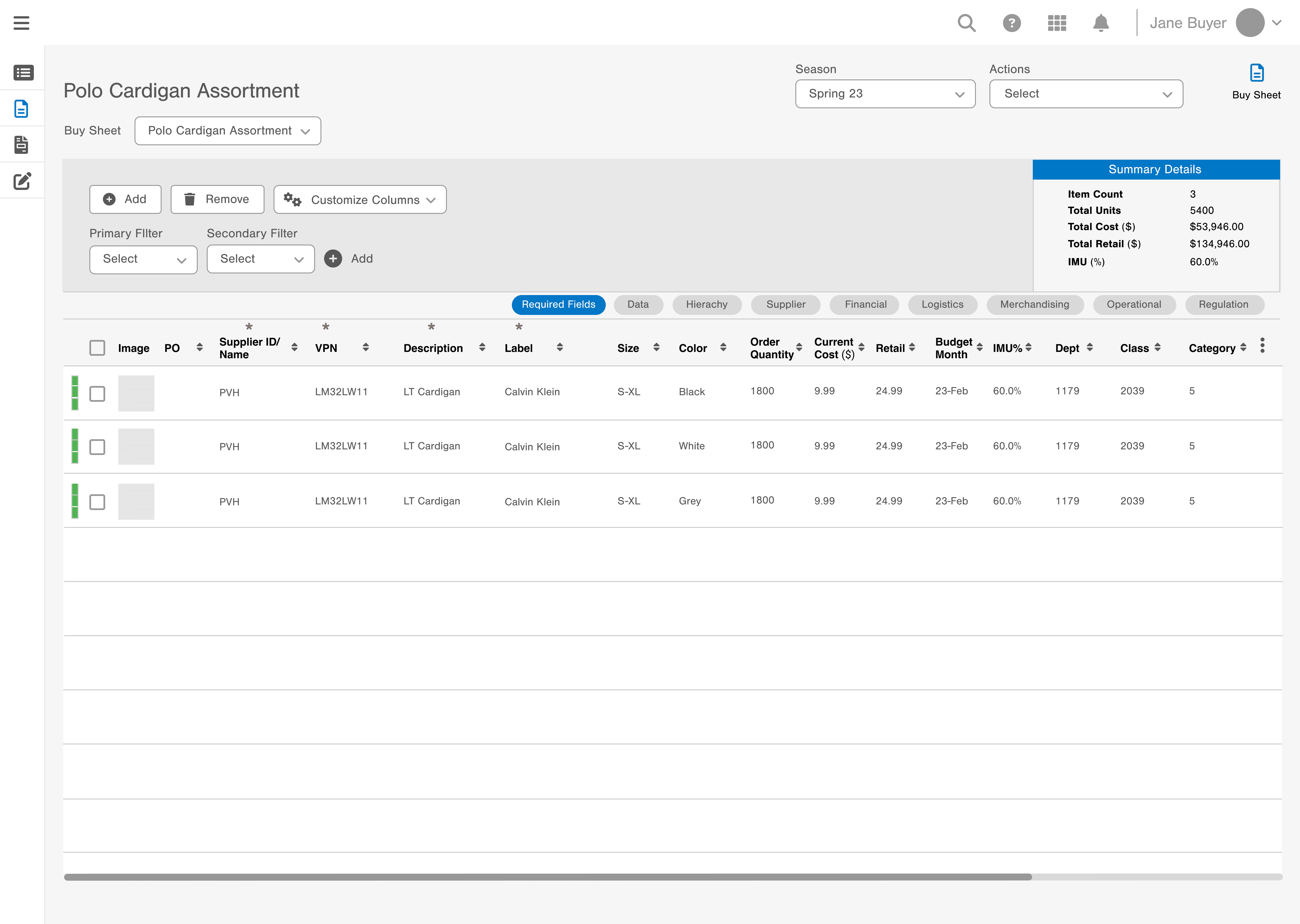
Why Assortment Sheets first?
Because this is the first process bleeds into both buy sheets and PO (purchase order) creation.
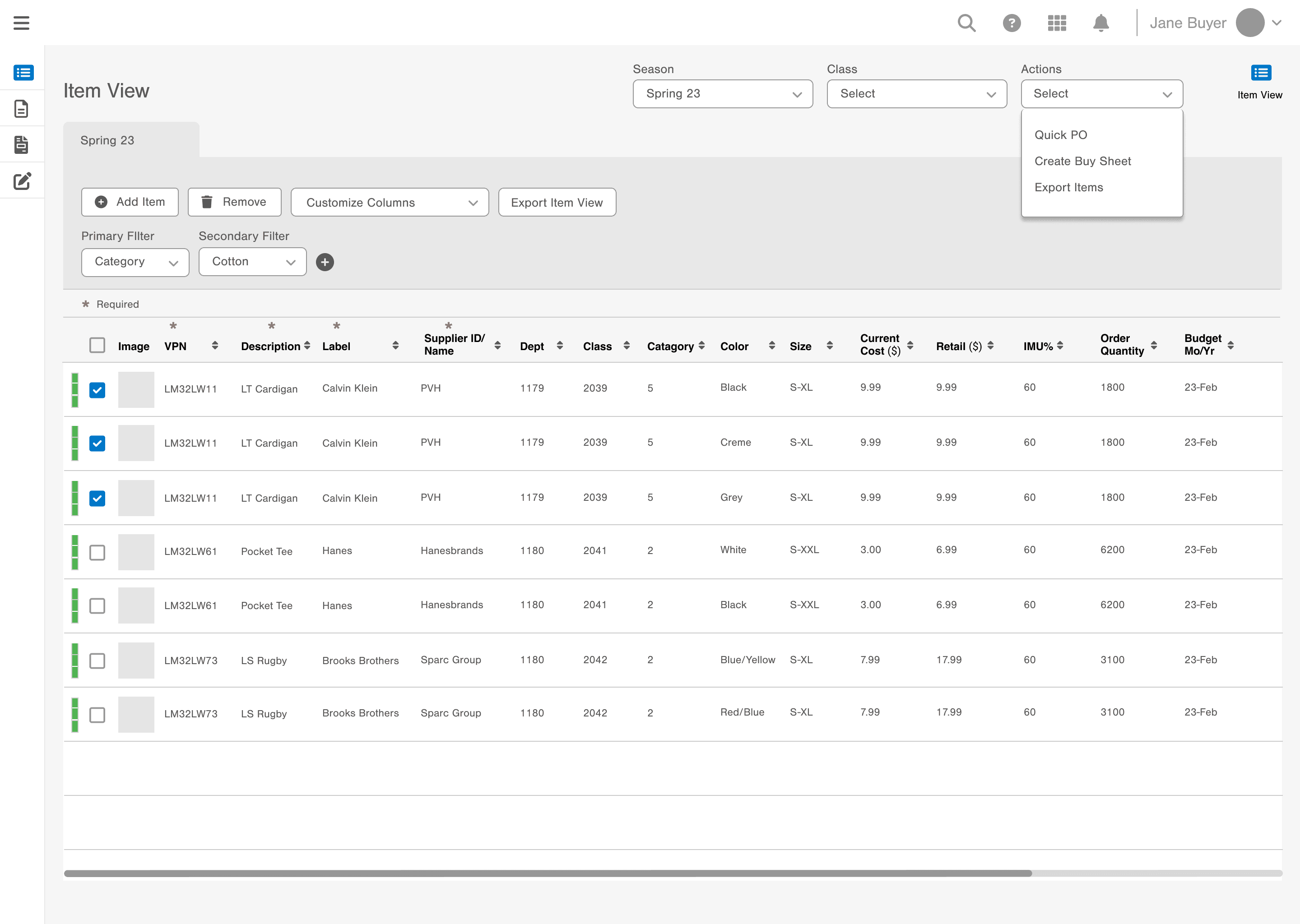
Then I went into creating the Buy Sheeting mockups.
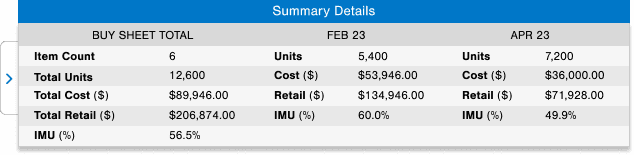
This was the most challenging part because buyers need to see their targets at all times when creating a buy sheet.
"The main problem with buy sheets is that the buyers were creating orders and sending those orders to vendors all through excel. This also served as their versioning technique. It's a time-consuming and confusing process and, if done wrong, costly." -notes from legacy research
Targets: Financial or operational metrics set by the retail management. This can include planned sales, gross margin return on investment (GMROI), or units per store per week
Before, reps would toggle between two different systems to see their targets and their buy plan. Now, the targets are front and center and update automatically as they build the buy plan.
Lastly buy sheets flow into Purchase Orders (POs). POs are pretty straight forward. They serve as receipts for the buy sheets. They are the last step before sending a vendor a buy sheet. Before getting PO approval, they can take a number of actions and review their final selections.
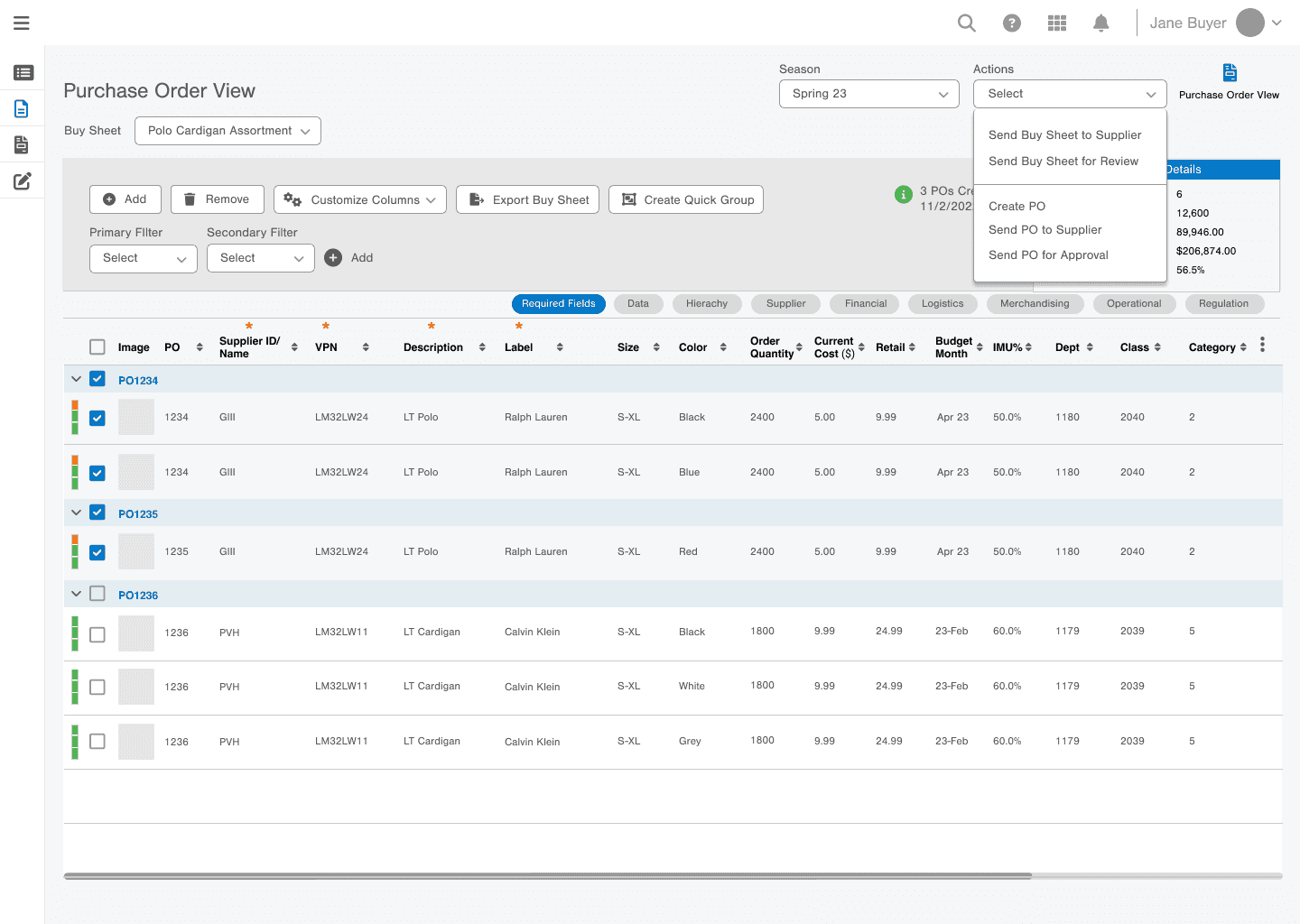
This was just a taste of the entire process.
If you want to know more about tradeoffs, what didn't make it into production, and challenges, get in touch with me for the full presentation!


Final Outcome
Cut buy sheet and vendor receipt creation time by 30% (15min - 10min)
Creating a buy sheet is now as easy as an excel upload, PDF upload or creating the list from scratch and a couple of clicks instead of scouring through Excel files.
Retrospective
My ability to self manage even surprised me. I was always taught to follow my manager but I took initiative and ownership for many parts of the process including bulk editing, creating the UI for the mockups and doing light initial research into what's currently working in other design libraries that deal with heavy data.
Challenges
The iteration turnaround times were challenging to say the absolute least. On the same day a new concept is presented, leadership would want a turnaround time that same day. I dealt with this by deprioritizing other flows or working with my manager to push the timeline out by a day. In the design world, turnaround times of about a day are normal. I was really tapping into my scrappy agency days because the client was so new to design and how it operates.
// Other works
Have a look at my other work

📄 Migrating a legacy auto claims system for 700+ employees
3 months
2022
The client was feeling the effects of having an outdated insurance claim processing system for their representatives.

Auto Insurance Company
UX Designer

⛳️ 400+ account creations for a mobile golf game
2 months
2024
The client wanted an integrated AR/VR games experience for families with young children who came to see the tournament.

Golf Tournament
Interaction Designer


